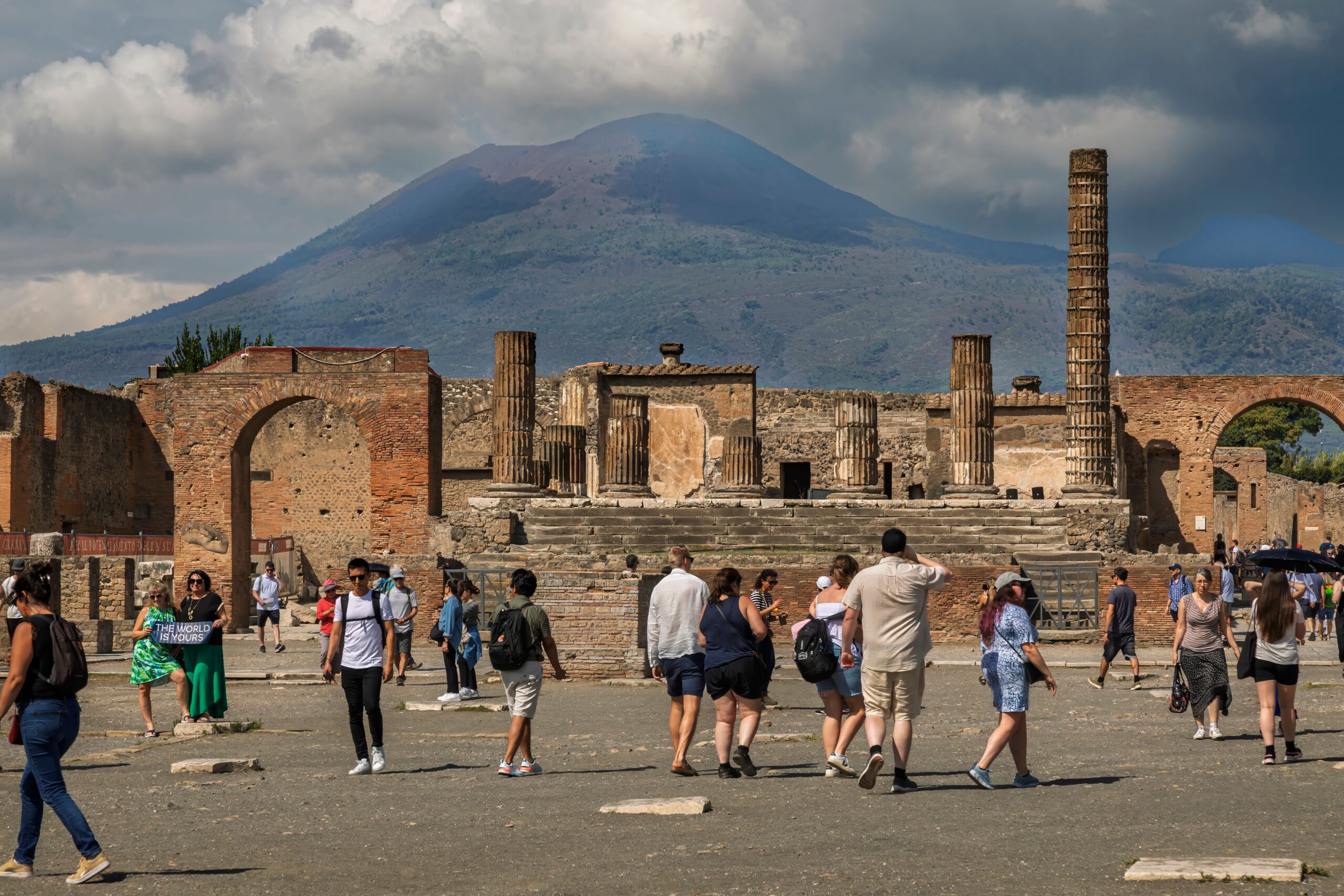
If you’re planning a trip to Sorrento or the Bay of Naples, chances are you’ve asked yourself one of the most common travel questions in southern Italy: Should I visit Herculaneum or Pompeii?
The short answer is this: Pompeii is the best choice if it’s your first visit and you want to experience one of the world’s greatest archaeological sites. Herculaneum is the better option if you prefer a quieter, more intimate experience where remarkably preserved buildings allow you to imagine everyday Roman life in extraordinary detail.
If you have the time, visiting both offers the fullest understanding of the catastrophic eruption of Mount Vesuvius in AD 79.
At Iamme Ia!, we speak with travelers making this decision every day. Some are history lovers with a full week in the Campania region, while others have just one free afternoon during their stay. The truth is that there isn’t a universal winner.
These two UNESCO World Heritage Sites complement each other beautifully, and understanding their differences will help you choose the experience that suits your travel style.
Pompeii and Herculaneum: Two Cities, One Historic Disaster
Although Pompeii and Herculaneum were both destroyed during the eruption of Mount Vesuvius in AD 79, they were affected in very different ways.
Pompeii was buried beneath several meters of volcanic ash and pumice. This blanket of material sealed the city for centuries, preserving streets, public buildings, homes and even the haunting impressions of victims, which archaeologists later recreated using plaster casts. Walking through Pompeii today feels like exploring an entire Roman city paused in time.
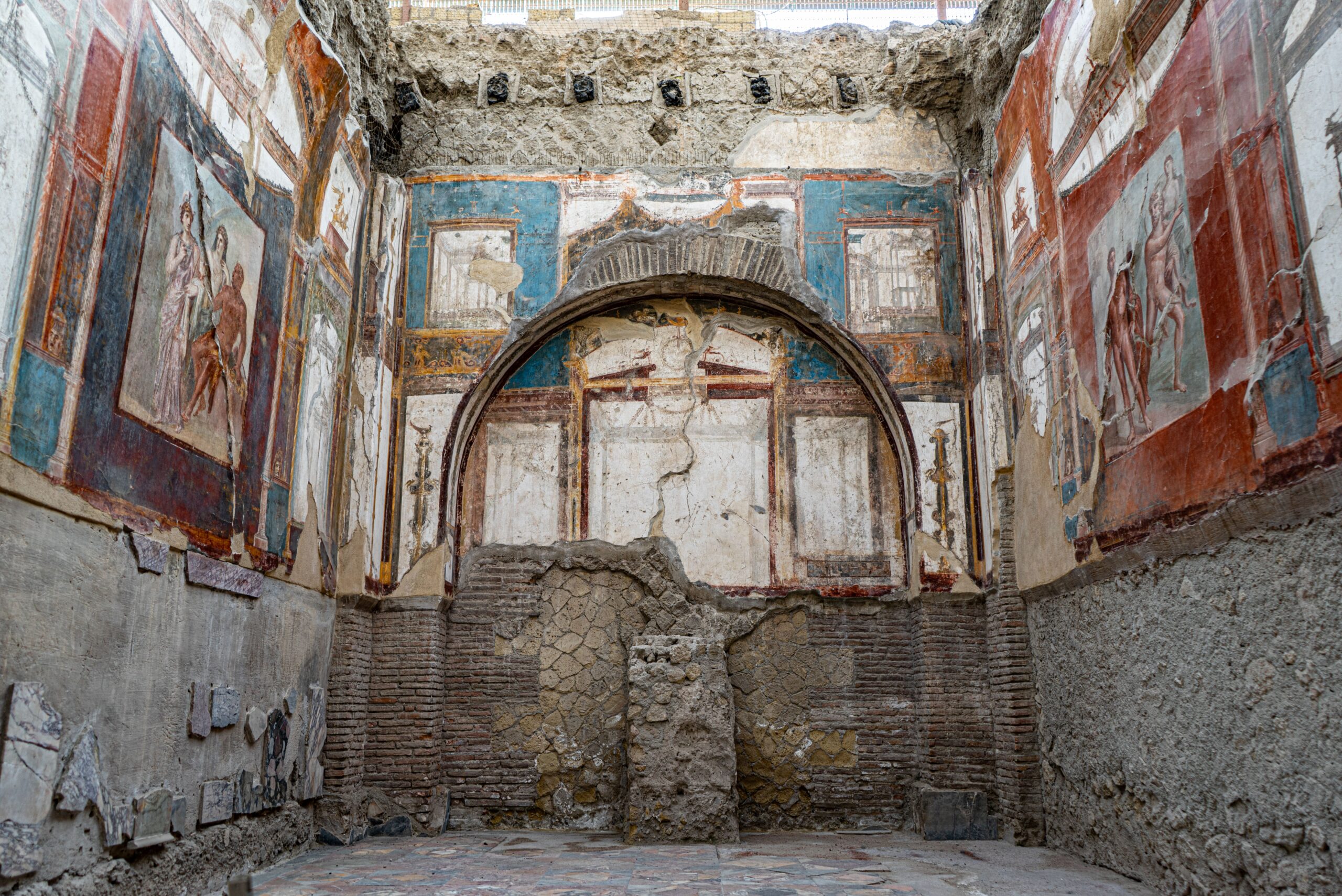
Herculaneum, by contrast, was struck by extremely hot pyroclastic flows. Rather than simply burying the town, these flows carbonized organic materials and protected remarkable details that rarely survive at ancient sites. Visitors can still admire original wooden beams, staircases, balconies, furniture, vivid frescoes and elegant mosaics that make the town feel astonishingly alive.
This difference is what makes the comparison so fascinating. Pompeii tells the story of a city. Herculaneum tells the story of its people.
Why Pompeii Is Still the Most Famous Roman Archaeological Site in the World
There is a reason Pompeii appears on so many travel bucket lists. Covering more than 60 hectares of excavated ruins, it is unlike any archaeological site on Earth.
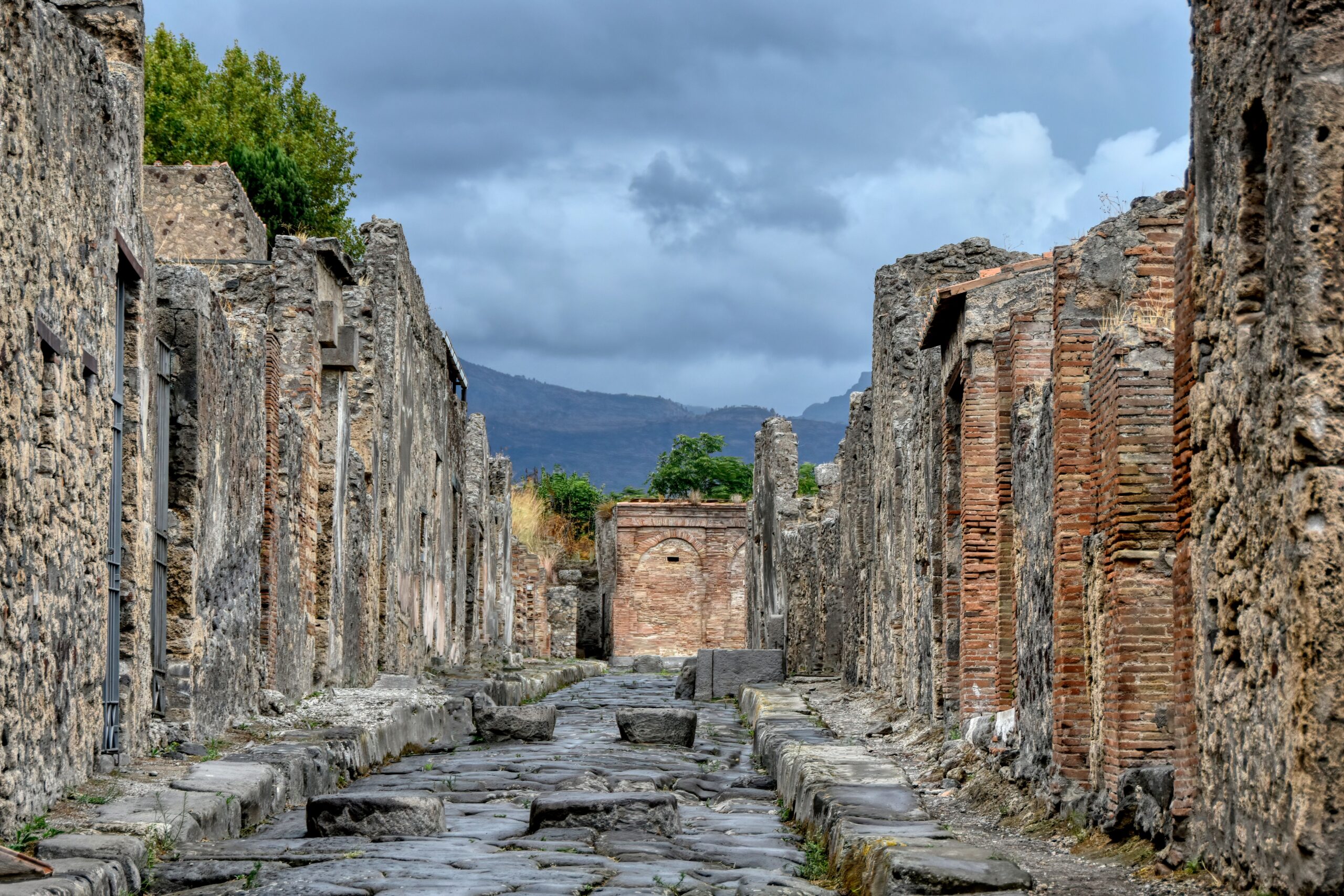
Rather than visiting a collection of isolated monuments, you find yourself wandering through an entire urban landscape. Ancient streets still bear the grooves left by cart wheels. Public fountains stand at street corners. Shops, bakeries and taverns line the roads, while elegant villas reveal the wealth enjoyed by some of the city’s residents before disaster struck.
One of the most remarkable aspects of Pompeii is its scale. Every turn reveals something new, from the vast Forum to the impressive amphitheatre, one of the oldest surviving Roman arenas. The Large Theatre, the Temple of Apollo, the luxurious House of the Faun and the mysterious Villa of the Mysteries each offer a different perspective on Roman society.
Many visitors are surprised by how modern Pompeii feels. Political slogans remain painted on walls, fast-food counters known as thermopolia still display their serving jars, and public baths reveal sophisticated engineering that would not seem out of place centuries later.
Because the site is so extensive, visiting Pompeii requires time. Four hours is generally the minimum needed to appreciate its highlights, while history enthusiasts could easily spend an entire day exploring without seeing everything.
It is also possible – and well worth considering – to visit Pompeii and Mount Vesuvius on the same day. Seeing the ruins before continuing to the volcano adds valuable context to the story of the AD 79 eruption. Iamme Ia! offers several Pompeii and Mount Vesuvius tours that make the day easy to organise.
Why Herculaneum Leaves Such a Lasting Impression
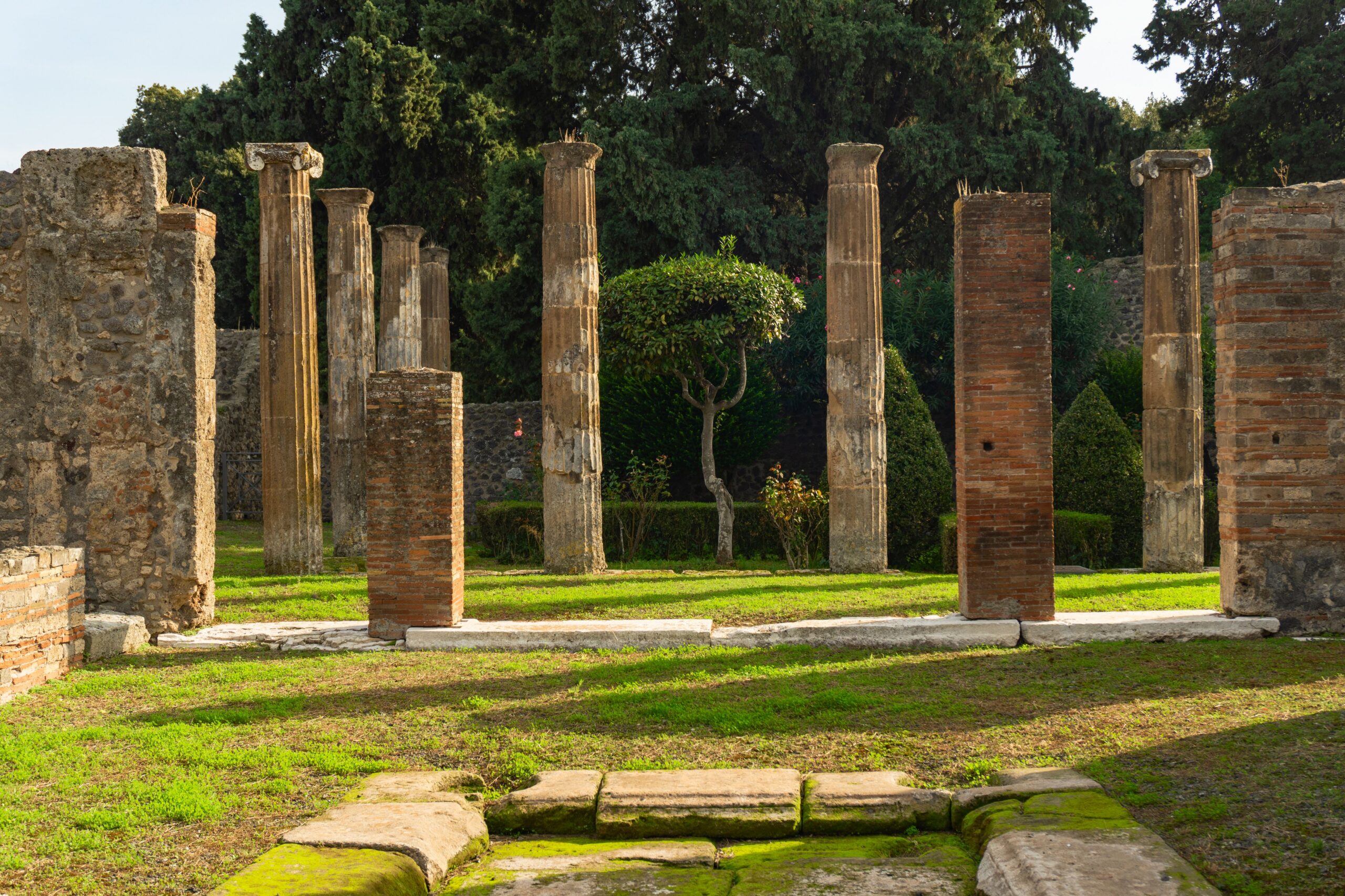
Herculaneum may be significantly smaller than Pompeii, but many travelers leave believing it was the highlight of their trip.
The first thing visitors notice is how well preserved everything is. Buildings often retain their upper floors, giving the streets a sense of height that Pompeii rarely offers. Wooden doors remain in their original positions, balconies overlook narrow lanes and beautifully decorated rooms still display colorful frescoes and intricate mosaics.
Instead of imagining what Roman houses once looked like, Herculaneum lets you see them with remarkable clarity.
The famous House of the Deer, the House of Neptune and Amphitrite and the ancient bath complexes demonstrate the wealth enjoyed by many of the town’s inhabitants. The waterfront area, where hundreds of skeletons were discovered during excavations in the twentieth century, provides one of the most moving reminders of the human tragedy caused by the eruption.
Unlike Pompeii, Herculaneum rarely feels overwhelming. Most visitors can comfortably explore the entire archaeological park in two to three hours, making it an excellent choice for families, cruise passengers or anyone with limited time.
explore all of Iamme Ia!’s Herculaneum experiences, and choose the option that best suits your itinerary.
Which Site Is Better Preserved?
If preservation is your priority, Herculaneum is the clear winner.
While Pompeii preserves the layout of an entire Roman city, Herculaneum preserves the details of Roman life. Original timber, carbonized furniture, decorative ceilings and multi-storey houses create an atmosphere that is almost impossible to find elsewhere.
This exceptional preservation continues to make Herculaneum one of the most important archaeological sites in the world. In recent years, it has also attracted international attention thanks to ongoing research into the carbonized scrolls discovered at the Villa of the Papyri. Advances in artificial intelligence and imaging technology have enabled researchers to begin reading scrolls that remained unopened for nearly two thousand years, offering exciting new insights into ancient philosophy and literature.
Pompeii, however, excels in a different way. Its vast streets, monumental public buildings and complete urban plan allow visitors to understand how a Roman city functioned on a daily basis. Few places in the world can offer such a comprehensive picture of ancient urban life.
The Atmosphere Could Not Be More Different
One of the biggest differences between Pompeii and Herculaneum is something that cannot easily be measured.
It’s how each place feels.
Pompeii is energetic, expansive and often busy. Even with improved visitor management and timed entry systems introduced in recent years, it remains one of Italy’s most visited attractions. During spring and summer, particularly in July and August, thousands of visitors arrive each day to explore its famous streets.
The atmosphere is exciting, but it can also feel demanding. Distances are considerable, shade is limited in many areas and planning your route becomes important if you want to make the most of your visit.
Herculaneum offers a completely different experience. The site is quieter, easier to navigate and often feels surprisingly peaceful. Because the streets are narrower and many buildings remain enclosed, visitors gain a stronger sense of walking through a living town rather than an open-air archaeological park.
Many guests staying in Sorrento tell us they expected Pompeii to be the highlight of their holiday, only to find themselves unexpectedly captivated by Herculaneum’s intimacy and extraordinary preservation.
Which Site Is Better for First-Time Visitors?
If you’ve never visited either site before, Pompeii remains the classic choice.
Its international reputation is well deserved, and seeing landmarks like the Forum, the amphitheatre and the famous plaster casts creates memories that stay with travelers for years.
However, if you’re someone who prefers slower travel, dislikes large crowds or enjoys architecture more than monumental ruins, Herculaneum may prove even more rewarding.
This is why many experienced travelers recommend avoiding the mindset of choosing a “winner.” Instead, think about the experience you want to have.
Pompeii impresses through its grandeur.
Herculaneum impresses through its authenticity.
Can You Visit Both Pompeii and Herculaneum in One Day?
Yes – and for many travelers, this is actually the ideal solution.
Because Herculaneum is relatively compact, it can comfortably be explored in the morning. After lunch, you can continue to Pompeii for an afternoon dedicated to its larger archaeological area.
Although this makes for a full day, it offers the most complete understanding of the eruption of Mount Vesuvius. You’ll experience two cities that shared the same fate while discovering how differently they were preserved by the volcano.
If you’d rather skip the logistics of coordinating transport, tickets and timings, Iamme Ia!’s Private Tour of Pompeii & Herculaneum with Priority Access from Sorrento is an excellent way to experience both sites in a single day.
So, Is Herculaneum or Pompeii Worth Your Time?
The honest answer is that both deserve a place on your itinerary.
Rather than asking which destination is “better,” perhaps the better question is what kind of experience you’re looking for.
Do you want to wander through the streets of an entire Roman city?
Or would you rather step inside remarkably preserved homes where the details of everyday life still feel incredibly close?
Whichever you choose, you’ll come away with a deeper appreciation of Roman civilization and the extraordinary power of Mount Vesuvius.
Explore Sorrento and the Amalfi Coast with Iamme Ia!
Who better to help you navigate this area than Iamme Ia!, your expert companion. Connecting with us is easy. For more information on our tours, to make bookings, or to discuss your upcoming travel plans, please visit our tour pages or contact page on our website.
If you find yourself wandering the charming streets of Sorrento, feel free to stop by our office at Piazza Torquato Tasso 16, where our friendly staff is eager to help you plan your next unforgettable adventure. As a proud Gray Line licensee, Iamme Ia! has been committed since 2014 to not only showcasing the stunning landscapes and rich culture of the Amalfi Coast but also to providing a narrative that weaves together breathtaking views, diverse experiences, and memorable moments.
With Iamme Ia!, your journey through Italy will be more than just a visit—it will be a profound engagement with the heart and soul of the region. Let us turn your trip into an experience of a lifetime.
Remember to join our Instagram community for some extra fun content!