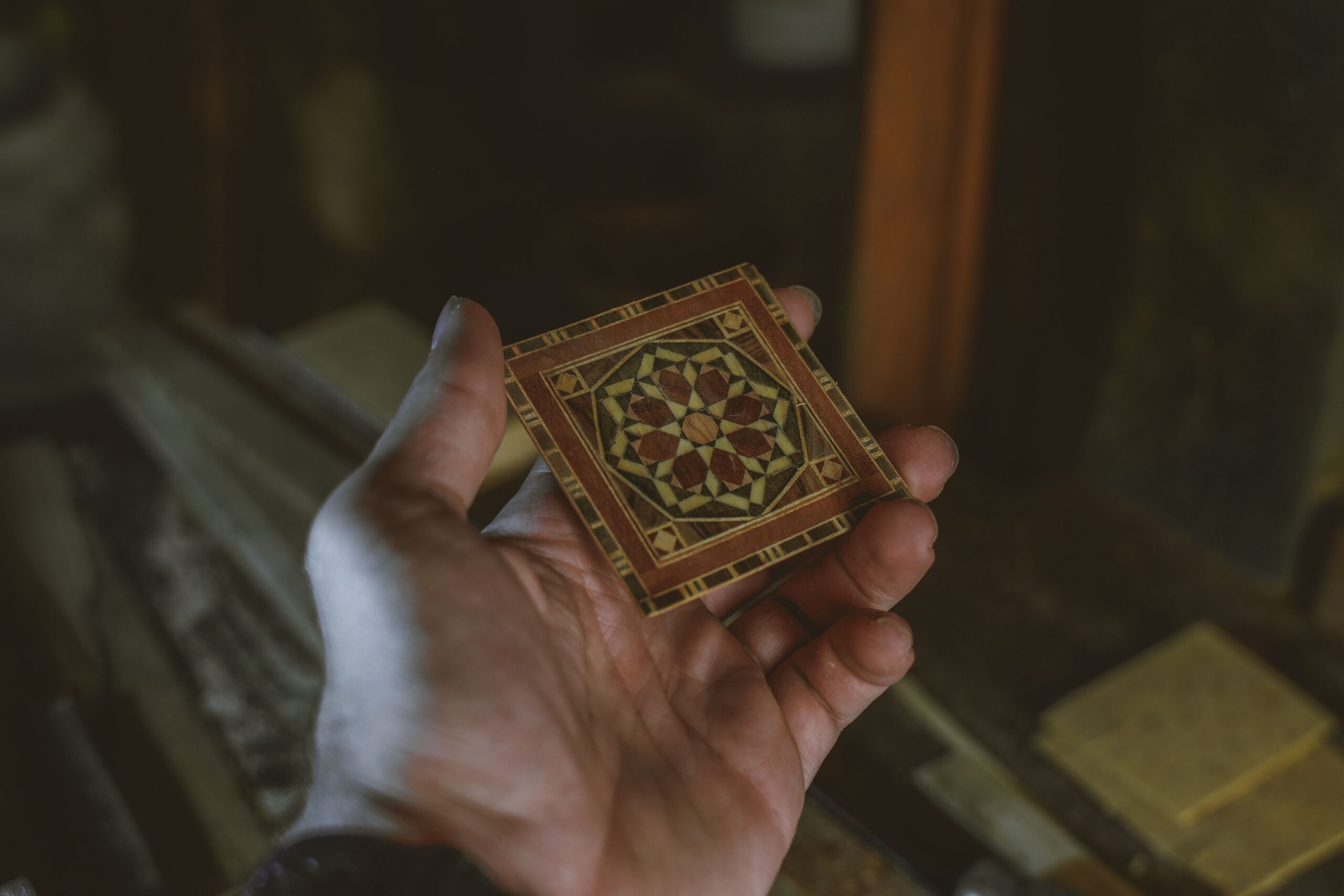
Walk through Sorrento’s historic centre and you will soon notice beautifully decorated wooden boxes, music boxes, trays, tables and panels in shop windows. Look more closely and you may discover that many of those intricate pictures and geometric patterns are not painted at all. They are created from tiny pieces of wood, carefully cut and fitted together by hand.
This is Sorrento wood inlay, known in Italian as tarsia lignea or intarsio sorrentino: one of the town’s most distinctive artistic traditions.
Although wood inlay has much older roots in Italy, Sorrento developed its distinctive tradition in the 19th century, when artisans used contrasting woods to create decorative scenes and objects for international visitors. Today, Sorrento inlaid wood remains a living craft, preserved in historic pieces and reinterpreted by local artisans.
For travellers who want to understand Sorrento beyond its famous sea views and lemons, intarsia opens a window onto the town’s creative identity.
What Is Sorrento Wood Inlay?
Wood inlay is a decorative technique in which thin pieces of wood in different colours, grains and tones are precisely cut and assembled to create an image or pattern.
Think of it as painting with wood instead of pigment.
The artisan chooses veneers according to their natural colour and grain, cuts each component of the design and then fits the pieces together. Depending on the technique, engraving and subtle shading may be added to give the finished composition greater depth.
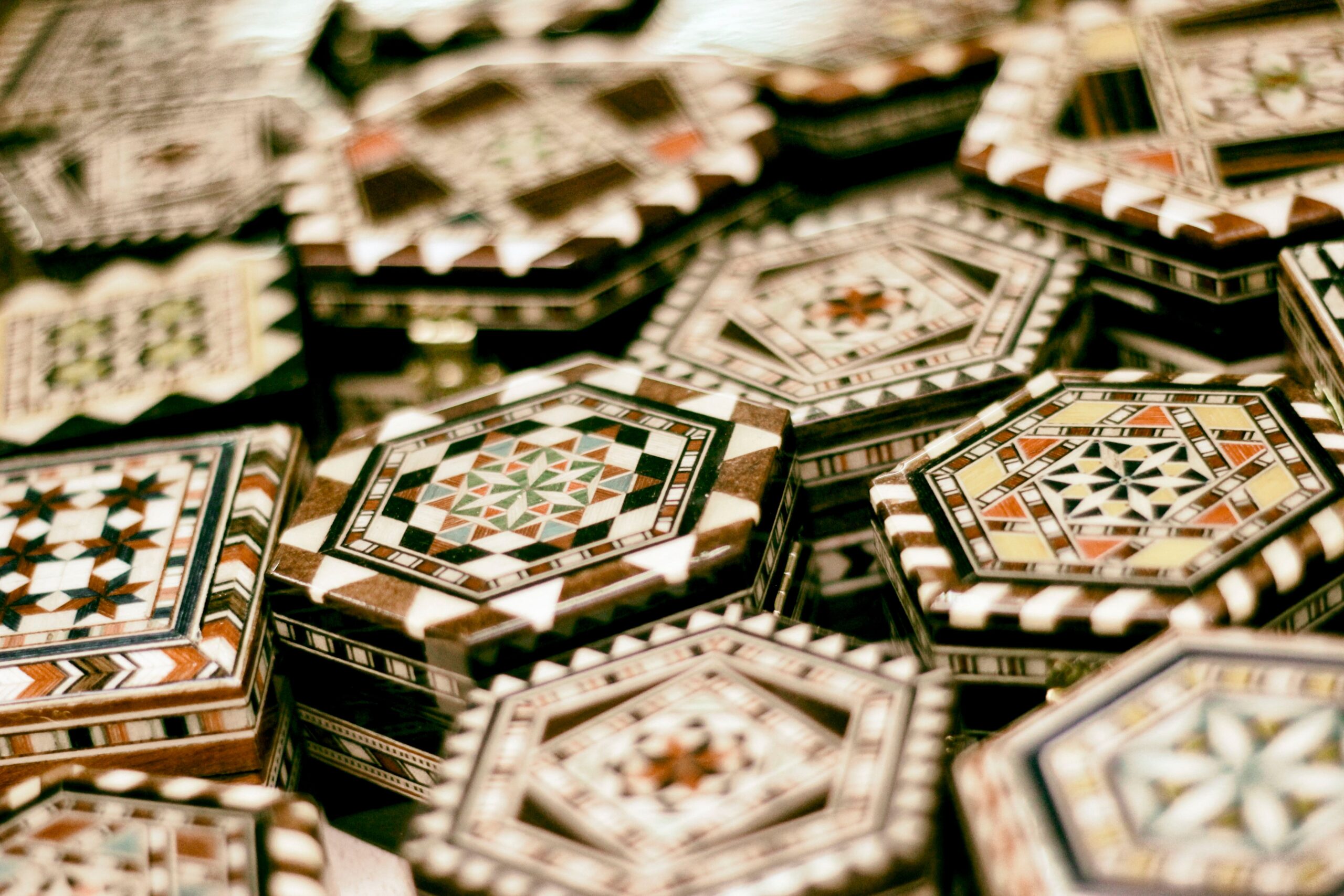
Traditional Sorrento designs often feature flowers, landscapes, geometric decoration, local figures, scenes of Neapolitan life, tarantella dancers and subjects inspired by nearby Pompeii.
Over time, the technique became particularly associated with decorative objects that visitors could take home, especially boxes and music boxes. It was a natural fit for a town increasingly visited by international travellers looking for something genuinely connected to Sorrento.
How Sorrento Became Famous for Intarsia
The wider Italian art of wood inlay dates back centuries, but Sorrento developed its own recognisable tradition much later.
A key period began around 1830, when Sorrentine cabinetmaker Antonio Damora experimented with contrasting local woods in furniture and decorative work. Walnut, olive and citrus woods could create striking differences in colour, while fine engraved details gave the compositions definition.
The timing was perfect.
During the 19th century, Sorrento was becoming increasingly connected with European travel. Visitors journeying through Naples, Pompeii and the Bay of Naples began spending time on the Sorrentine Peninsula, creating demand for artworks and objects that captured memories of southern Italy.
Local craftsmen responded with increasingly sophisticated work.
Sorrentine marquetry gained recognition far beyond Campania, and by the middle of the century workshops were appearing throughout the historic centre.
The craft had evolved from individual experimentation into an important element of Sorrento’s cultural and commercial identity.
If you want to explore the streets where these traditions developed, Iamme Ia!’s Guided Walking Tour of Sorrento is particularly relevant: the experience includes a stop dedicated to discovering local wood-inlay craftsmanship.
From Workshop Craft to Sorrento Institution
As demand increased, intarsia became more organised and specialised.
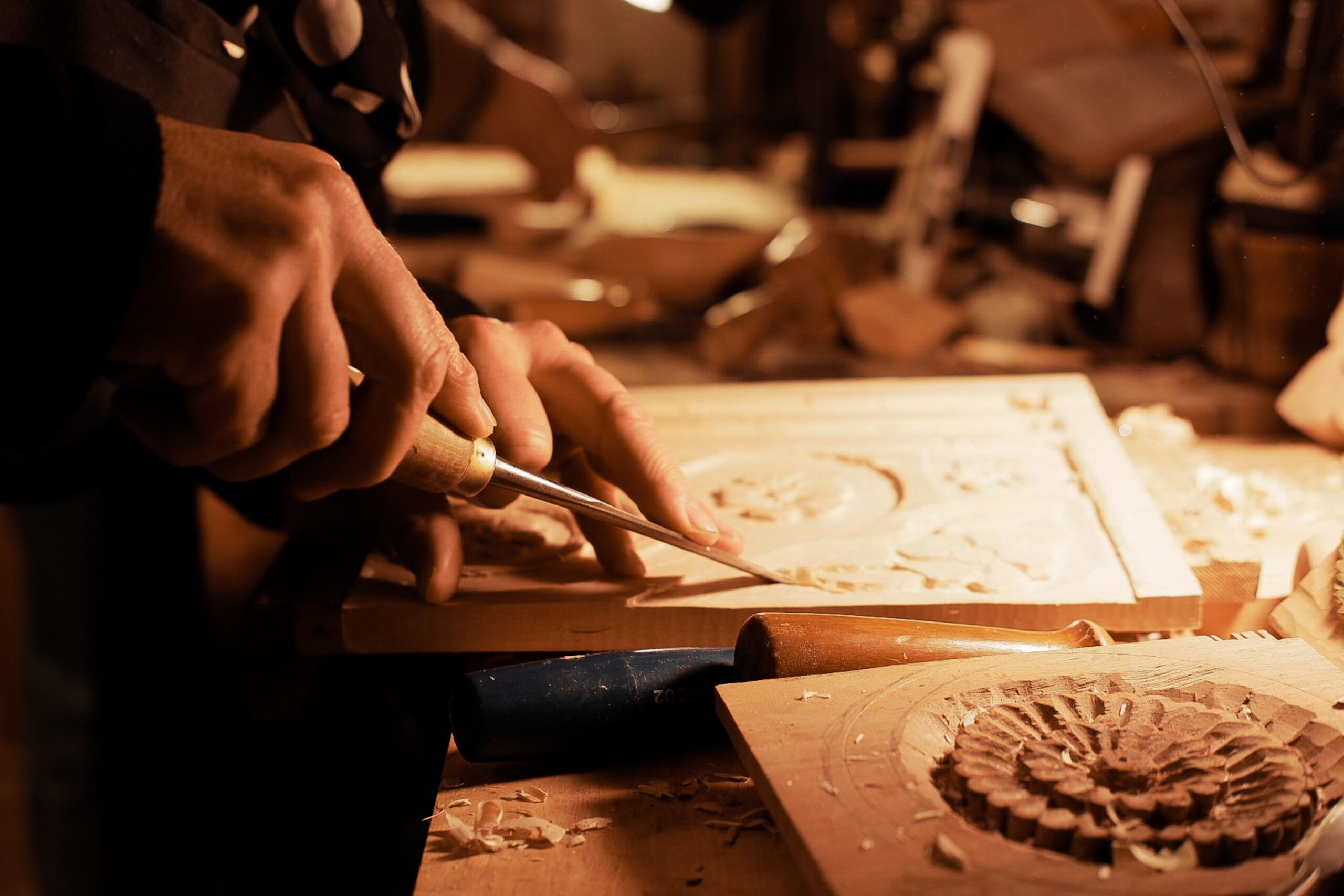
Different craftsmen could contribute different stages of production, from preparing the wood and cutting the veneers to assembling scenes and completing the finest decorative details.
Education played an important role too.
A local school teaching drawing, cabinetmaking and intarsia developed during the late 19th century, helping to train new generations of Sorrentine craftspeople. Formal education worked alongside something even more important: knowledge passed from master to apprentice and, frequently, from one generation of a family to another.
That continuity helps explain why the craft survived..
How Is Sorrento Inlaid Wood Made?
Traditional intarsia requires remarkable precision because even a relatively small design may contain numerous individually shaped elements.
The process begins with the design. The artisan decides on the composition, whether it is a landscape, floral decoration, traditional figure or contemporary geometric pattern.
Next comes the selection of wood.
Different woods naturally provide different colours, textures and grain patterns. Historically, Sorrento’s artisans worked with varieties including walnut, olive and citrus woods, while later craftspeople expanded their palettes through additional woods and coloured veneers.
The veneers are then cut according to the design.
Each shape must fit closely against the next, almost like an extraordinarily intricate wooden puzzle. Techniques used to create shading can add depth, while engraving helps define architecture, faces, clothing, vegetation and other tiny details.
Once assembled, the composition is applied to its wooden support, smoothed and finished.
Traditional Sorrento Intarsia Meets Contemporary Design
One of the most interesting aspects of Sorrento’s wood-inlay tradition today is that it has not remained frozen in the 1800s.
Historic designs are still important, particularly on jewellery boxes, music boxes, trays, game boards, panels and furniture. At the same time, contemporary artisans have explored modern compositions, stronger colours and cleaner geometric forms.
This connection between tradition and contemporary design has even reached the world of luxury fashion. Italian fashion house Fendi celebrated Campania’s wood-inlay craftsmanship through its Hand in Hand project, collaborating with local artisans to reinterpret the traditional intarsia technique in an exclusive handbag.
This evolution matters.
A craft survives when new generations have reasons to practise it and when visitors continue to value genuine workmanship. Sorrento’s intarsia therefore occupies an interesting space between preservation and reinvention.
It is part of a much broader Sorrentine culture in which traditional skills are continually reinterpreted.
Food offers another example: travellers interested in living traditions can combine exploring artisan workshops with an authentic Sorrento Cooking Class & Food Experience, where local recipes and ingredients become another way of understanding the area’s heritage.
Where to See Wood Inlay in Sorrento
You do not have to leave Sorrento to explore the tradition. Several important examples can be reached easily on foot from Piazza Tasso.

Museobottega della Tarsialignea – MUTA
For anyone particularly interested in Sorrento wood inlay, the Museobottega della Tarsialignea, commonly known as MUTA, is an excellent place to begin.
Housed in Palazzo Pomarici Santomasi in the historic centre, the museum explores the development, techniques and artistic evolution of Sorrentine intarsia.
Its collection helps visitors understand how a practical woodworking skill became one of Sorrento’s most recognisable decorative arts.
Museo Correale di Terranova
The Museo Correale is another useful stop for understanding Sorrento’s artistic history.
Its collection includes examples of local craftsmanship that place 19th-century intarsia within the broader cultural world of Sorrento and the Bay of Naples.
Sorrento’s wood-inlay tradition has also attracted international interest. Its artistic legacy extends beyond Italy, with prestigious institutions such as The Metropolitan Museum of Art in New York and the Victoria and Albert Museum in London preserving important examples of historic marquetry and decorative woodwork. This wider recognition reflects the artistic significance of the craftsmanship for which Sorrento became famous.
Sorrento Cathedral
The Cathedral of Saints Philip and James provides a very different encounter with the tradition.
Rather than seeing intarsia exclusively on portable decorative objects, visitors can observe how sophisticated local woodworking became part of Sorrento’s architecture and religious heritage.
Together, these locations demonstrate an important point: intarsia is not simply something sold in Sorrento. It belongs to the city.
For a wider itinerary connecting the cathedral, historic streets, viewpoints and lesser-known corners, see our guide to spending a day in Sorrento and discovering its must-see attractions and hidden gems.
How to Recognise Authentic Sorrento Wood Inlay
Not every wooden souvenir is equivalent to traditional handmade intarsia.
When examining a piece, look closely at the decoration. With genuine marquetry, the image is formed from separate pieces of veneer, meaning you should be able to notice differences in grain, colour and direction within the design.
Precision is important, but handmade craftsmanship does not necessarily mean every detail will look mechanically identical. Tiny variations may actually reflect individual work.
Ask where the object was made and how it was produced. A specialist artisan should normally be able to explain something about the woods, design or technique involved.
Most importantly, consider the workmanship rather than price alone.
A handcrafted object requiring careful cutting, assembly and finishing cannot realistically be compared with a mass-produced decorative souvenir.
Frequently Asked Questions About Sorrento Wood Inlay
What is Sorrento wood inlay called?
Sorrento wood inlay is commonly called intarsio sorrentino or tarsia lignea. In English, the technique is generally described as wood inlay or marquetry.
Why is Sorrento famous for inlaid wood?
Sorrento became an important centre for decorative wood inlay during the 19th century. Local craftsmen developed distinctive techniques and created furniture, panels, boxes and other objects that became popular with international visitors.
When did wood inlay begin in Sorrento?
Wood inlay has a much longer history in Italy, but the recognisable Sorrento tradition developed during the early 19th century, with Antonio Damora generally associated with an important phase beginning around 1830.
Is Sorrento wood inlay still made by hand?
Yes. Sorrento still has artisans producing handmade intarsia, although quality and production methods vary considerably. Specialist workshops remain the best place to understand the difference between authentic craftsmanship and mass-produced decoration.
Can I visit a wood-inlay workshop in Sorrento?
Yes. Iamme Ia!’s private Sorrento walking tour includes a stop to discover wood-inlay craftsmanship with a local guide, making it one of the easiest ways to connect the tradition with the historic centre where it developed.
What are traditional Sorrento intarsia designs?
Typical subjects include floral and geometric decoration, Sorrento landscapes, figures, scenes of Neapolitan life, tarantella dancers and compositions influenced by the art and archaeology of Pompeii.
What should I buy in Sorrento if I want traditional intarsia?
Jewellery boxes and music boxes are among the most recognisable Sorrentine intarsia objects, but you may also find trays, picture frames, game boards, decorative panels and furniture. Look closely at the veneer, workmanship and provenance rather than buying purely on appearance.
Is Sorrento worth exploring beyond a day trip?
Absolutely. Sorrento works particularly well as a base because its historic centre, traditional crafts and food culture can be combined with day trips to Capri, Pompeii, Mount Vesuvius, Positano, Amalfi and Ravello. Browse the complete collection of Iamme Ia! tours and experiences to see what can be reached from Sorrento.
Explore Sorrento and the Amalfi Coast with Iamme Ia!
Who better to help you navigate this area than Iamme Ia!, your expert companion. Connecting with us is easy. For more information on our tours, to make bookings, or to discuss your upcoming travel plans, please visit our tour pages or contact page on our website.
If you find yourself wandering the charming streets of Sorrento, feel free to stop by our office at Piazza Torquato Tasso 16, where our friendly staff is eager to help you plan your next unforgettable adventure. As a proud Gray Line licensee, Iamme Ia! has been committed since 2014 to not only showcasing the stunning landscapes and rich culture of the Amalfi Coast but also to providing a narrative that weaves together breathtaking views, diverse experiences, and memorable moments.
With Iamme Ia!, your journey through Italy will be more than just a visit—it will be a profound engagement with the heart and soul of the region. Let us turn your trip into an experience of a lifetime.
Remember to join our Instagram community for some extra fun content!