Pompeii is more than just a ghostly reminder of volcanic fury: it’s a living portrait of ancient Roman life, frozen in time. As you wander through its cobbled streets, mosaicked villas, and shadowy alleys, the city offers up not only its tragedies but also its triumphs, peculiarities, and secrets.
Here are our ten picks of the most fascinating Pompeii curiosities and discoveries that shed light on the vibrant, complex world that once thrived beneath the looming shadow of Mount Vesuvius. Let’s read them!
1. The Bacchus banquet fresco
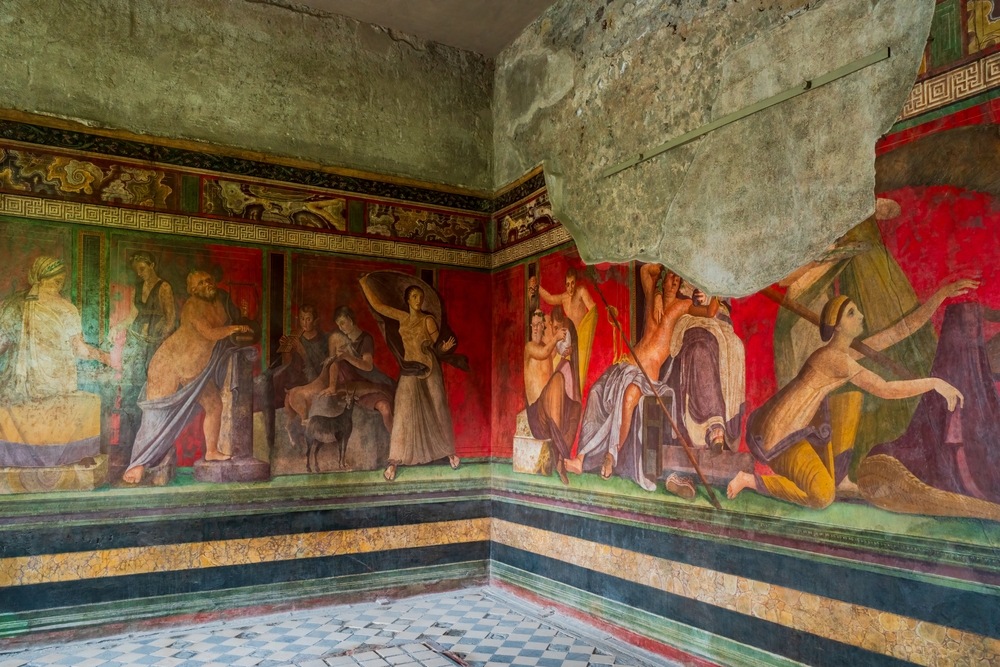
Step into the shadowed halls of a once-glorious villa and you’ll find a wall that still whispers of revelry. In one of Pompeii’s most thrilling recent discoveries, a vivid fresco emerges from the ash – alive with movement, mystery, and music. It portrays a Bacchic procession, a swirling dance of figures honoring Bacchus, the Roman god of wine, ecstasy, and the liberating power of the divine. The scene is more than decorative; it’s theatrical, magnetic, its characters mid-motion, their expressions caught between trance and celebration.
This isn’t just a relic of ancient decor. It’s a window into the soul of Pompeii, where public spectacle met private belief. The fresco’s intoxicating energy suggests a household deeply engaged in rites not meant for the masses, but for those who knew how to look beyond the veil. In this quiet corner of a buried home, the wild heart of Roman spirituality pulses once more.
Location: it was uncovered in the House of Thiasus, located in Regio IX, Insula 10 of Pompeii.
2. The ‘blue room’ shrine
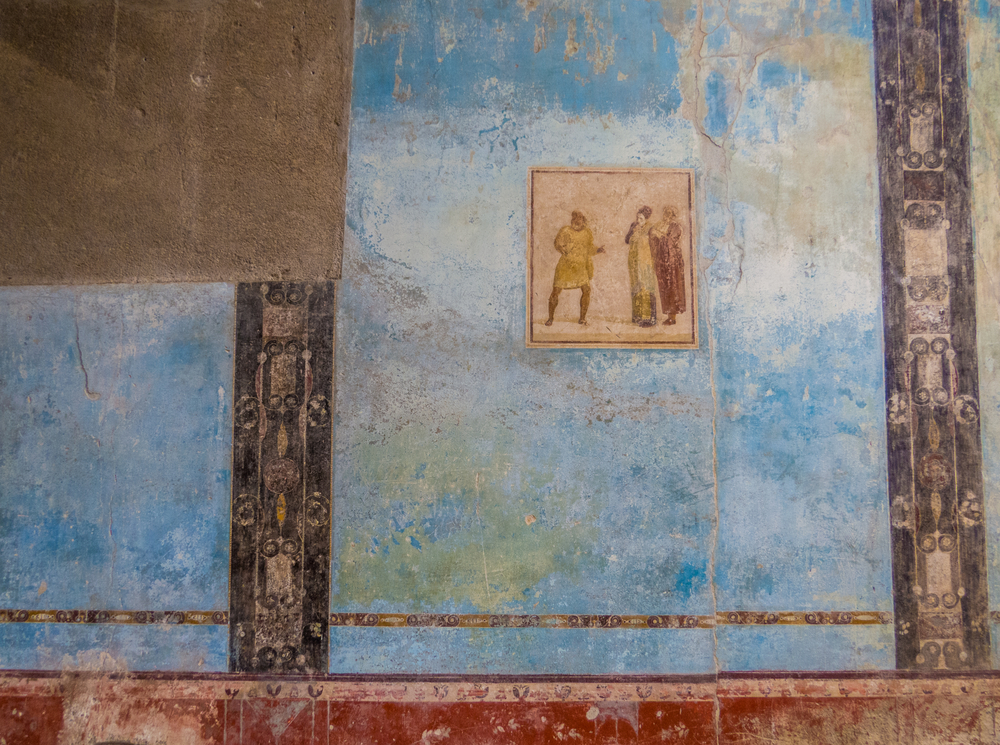
Imagine entering a small chamber where the air seems thicker, the walls drenched in deep cobalt that feels both serene and charged. That’s the experience archaeologists encountered when they revealed Pompeii’s enigmatic ‘blue room’: a space unlike any other, wrapped entirely in luxurious ultramarine. It wasn’t just for show. This was a sacrarium, a sacred room for private rituals, prayer, and family offerings to household gods.
The choice of color alone was a statement. Blue pigments of this quality were rare and costly, likely imported and painstakingly applied. But the effect goes beyond wealth: it’s atmospheric, almost hypnotic. The room doesn’t shout; it invites you to step into silence, into stillness. It suggests a family that carved out a slice of the divine within their home, creating a sanctuary not of marble and grandeur, but of mood and meaning. In the blue room, devotion becomes intimate: a daily, deliberate act wrapped in a dream of color.
Location: it was discovered during excavations in Regio IX of Pompeii.
3. The Pompeii Lakshmi
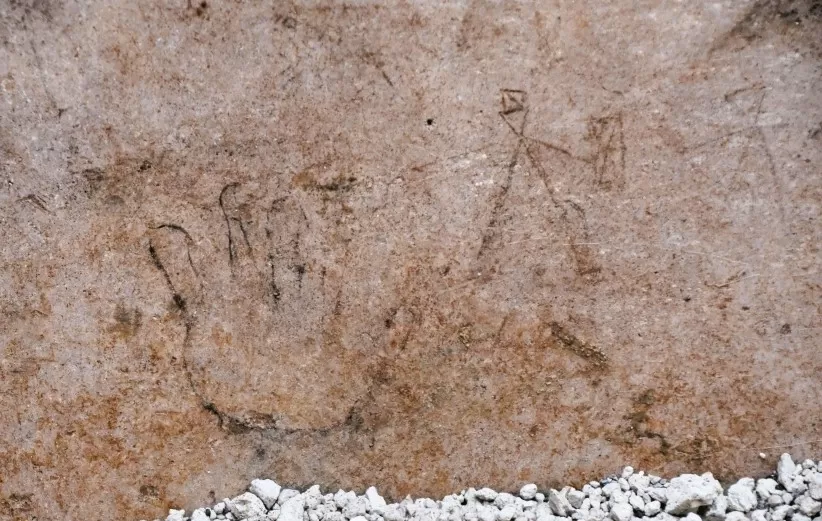
Among the ashes of a Roman empire, an Indian goddess waited to be rediscovered. Delicate and luminous, carved in ivory, the statuette believed to represent Lakshmi – goddess of beauty, fortune, and fertility: was unearthed in Pompeii, far from the shores of the Ganges. Her presence here is more than surprising. It’s mind-expanding.
How did she arrive in a Roman household, cloaked in centuries of soot and silence? Through the invisible arteries of ancient trade, routes that wound from the Mediterranean to the Indian subcontinent, passing through deserts, ports, and empires. In her serene gaze and flowing robes lies evidence of a world far more connected than we often imagine. Not just a trinket, but a testimony: of curiosity, exchange, and the cultural fusion woven into Pompeii’s very foundations.
Location: it was discovered in a private residence in Pompeii, though the exact Regio and Insula are not precisely documented.
4. Preserved loaves of bread
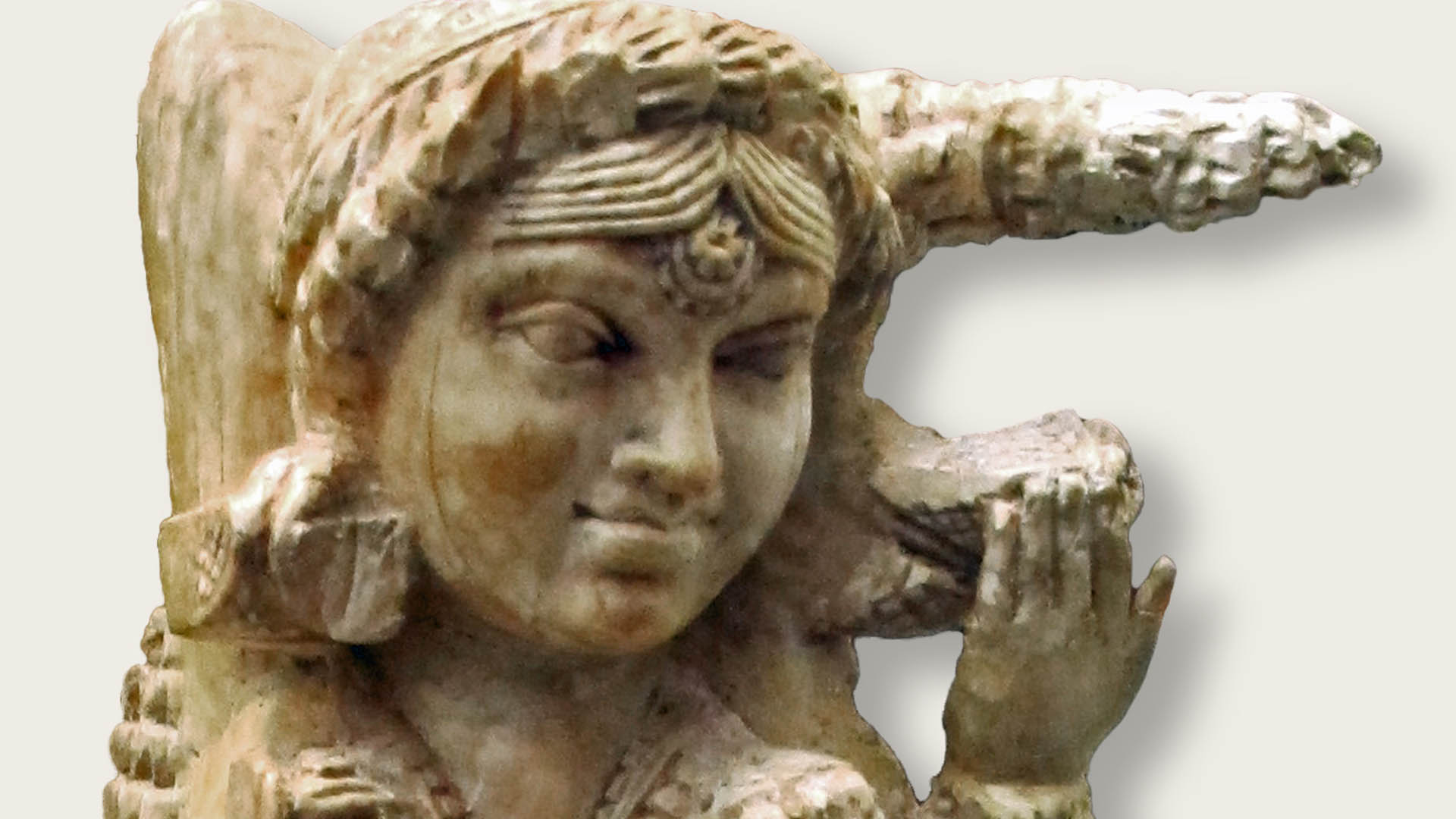
In one silent bakery, time held its breath. There, within a soot-blackened oven, archaeologists discovered loaves of bread, still perfectly round, still bearing the baker’s mark, still scored to be broken and shared. These weren’t symbolic offerings or ceremonial relics. They were ready to be sold, eaten, enjoyed.
The carbonized crusts are dark and rough now, but they speak with vivid clarity. Of hands that kneaded dough before dawn. Of flour dust floating in morning light. Of meals never eaten, of chatter that fell silent in a moment. These loaves are not just culinary remnants – they’re intimate echoes of lives interrupted.
Pompeii often dazzles with frescoes and fountains, but it’s here, in a simple loaf of bread, that the everyday becomes eternal.
Location: they were found in the oven of a bakery in Regio VII, Insula 2, in the area known as the Panificio di Modesto.
5. Erotic art in the Lupanar
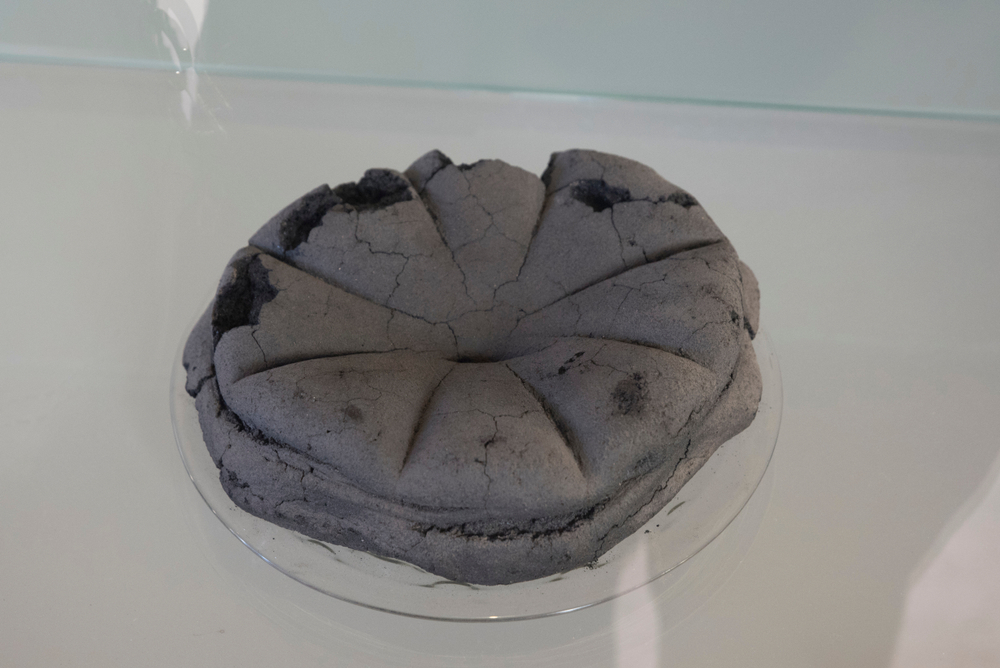
Step into the Lupanar, the house of wolves, and you’re immediately confronted by walls that pull no punches. The brothel of Pompeii doesn’t whisper about desire; it shouts. Above stone beds and narrow passageways, frescoes burst with unabashed sensuality. Scenes of intimacy, often playful and sometimes surreal, parade across the plaster like a Roman Kama Sutra. But these aren’t just ancient erotica. They served a function, a visual menu, helping clients navigate their options in a world where language barriers were common and literacy rare.
Equally fascinating are the voices scribbled into the walls. Graffiti left by clients, workers, even casual observers speak with wit, tenderness, and irreverence. Here, desire wasn’t hidden in the dark – it was part of life, work, commerce, and humor. The Lupanar offers more than titillation. It reveals a society that viewed sex through a radically different lens: earthy, transactional, and woven into the very architecture of daily life.
Location: it is located in Regio VII, Insula 12, centrally positioned near Pompeii’s forum and easily identifiable by its layout and dual-floor structure.
6. Children’s gladiator drawings
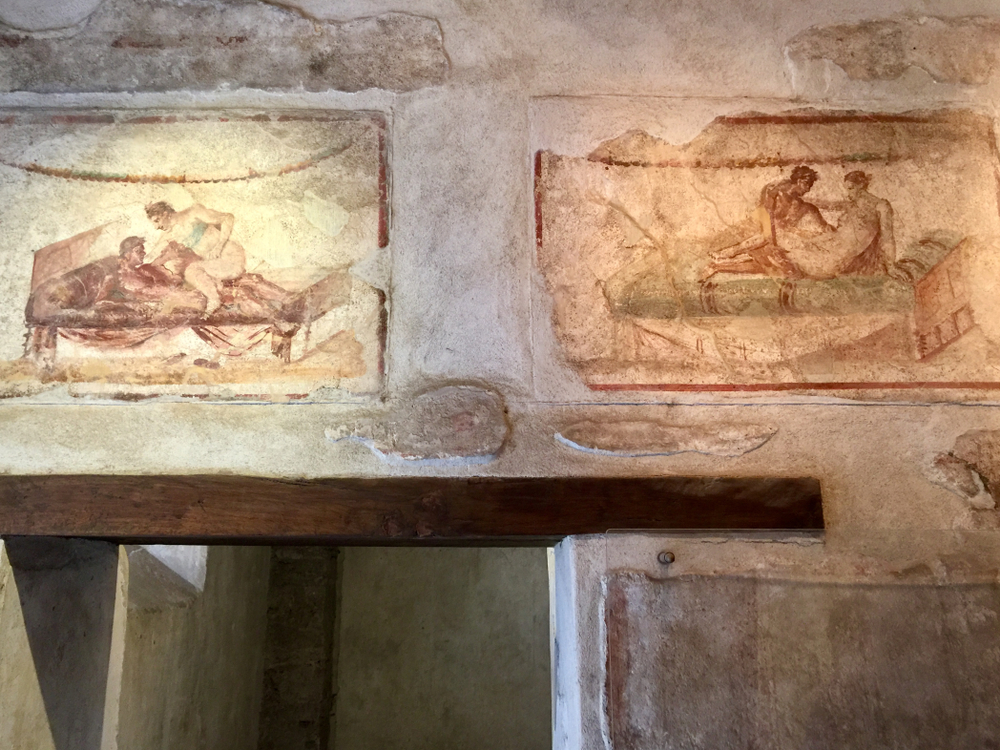
In a quiet corner of a Pompeian house, etched faintly into plaster, a battle is frozen in time: not between real gladiators, but those imagined by a child’s hand. The drawings are rough, simple, and profoundly human. Two stick-figure warriors, one wielding a net, the other a trident, clash in a contest that likely played out in the minds of countless young Pompeians. To them, gladiators weren’t just fighters, they were larger-than-life legends.
These innocent scribbles offer a rare look into childhood in the ancient world, often eclipsed by tales of emperors and disasters. They tell of kids who mimicked the world around them, who dreamed of the arena, who played with the same intensity and imagination as children today. It’s a tender, unexpected reminder: even in a city famous for its opulence and tragedy, there were crayons on the wall and dreams in small fists.
Location: the drawings were discovered in a residential building in Regio V, near the so-called House of the Silver Wedding.
7. Thermopolium: ancient Roman fast food
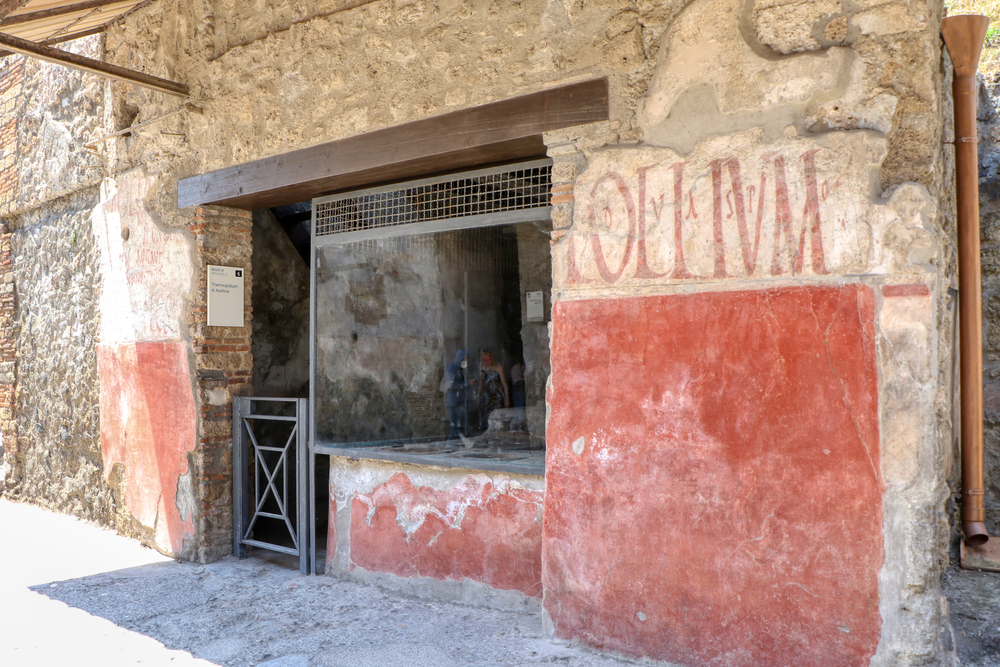
Imagine turning a corner in ancient Pompeii and stumbling upon the Roman answer to a food truck. In 2020, excavations unveiled a remarkably preserved thermopolium, a street-side food stall that once served sizzling meals to locals in a hurry. But this wasn’t just any roadside stop. Its counter bursts with vivid, almost whimsical frescoes – ducks, roosters, a watchdog on a leash – turning a quick lunch into an artistic encounter.
This wasn’t just about convenience. It was flavor, color, and culture served hot. Remnants found in the containers revealed a menu that could rival today’s most adventurous foodies: duck, pork, snails, fish stew, beans. Spices still clung to the pots. Bones lay where customers had once stood. And it all paints a picture of a Pompeii that didn’t just eat to survive, but to enjoy.
Fast food, Roman-style, was a sensory feast – and in this thermopolium, that feast is still being served, if only to the imagination.
Location: it was discovered in Regio V, in the area known as the Thermopolium of Regio V, near the intersection of Vicolo delle Nozze d’Argento and Vicolo dei Balconi.
8. Giraffe bone discovery
In the ruins of a luxurious Pompeian home, archaeologists found something utterly unthinkable: the bone of a giraffe. Not a painting, not a mosaic, an actual bone. And with it, a story of ambition, luxury, and spectacle unfurled.
In a city known for its decadence, a giraffe bone feels almost mythic. These towering creatures were rare even in Africa, yet one found its way to a Roman city via exotic trade routes that stitched together empires. Was it paraded in the arena, kept as a prized curiosity, or offered as a gift to flaunt prestige? We may never know. But its presence is a bold declaration of Pompeii’s reach and Rome’s insatiable hunger for the extraordinary.
The giraffe, even in fragments, looms large as a symbol of the Roman desire to possess the rarest wonders the known world could offer.
Location: the giraffe bone was unearthed in Regio V, within a complex of elite homes near the intersection of Vicolo delle Nozze d’Argento.

9. Mythological frescoes in dining rooms
In the softly lit triclinium, the Roman dining room, feasting wasn’t just for the body. It was for the mind. On the walls of Pompeian homes, mythological frescoes brought ancient legends into the most intimate of gatherings. One fresco might capture the fateful gaze between Helen and Paris; another, the anguished moment before Medea’s descent into madness. These weren’t mere decorations, they were deliberate provocations.
As guests reclined and drank, their eyes roamed over tales of love, betrayal, heroism, and doom. The myths served as conversation starters, moral puzzles, or reflections of the host’s cultural cachet. These frescoes reminded diners that the gods watched, that fate turned on a whisper, and that human folly was a spectacle worth retelling, especially over wine. In these rooms, myth was not a distant tale. It was part of the furniture.
Location: notable mythological frescoes were found in dining rooms throughout Regio V, including in the House of the Lovers and the House of the Orchard.
10. The House of the Tragic Poet
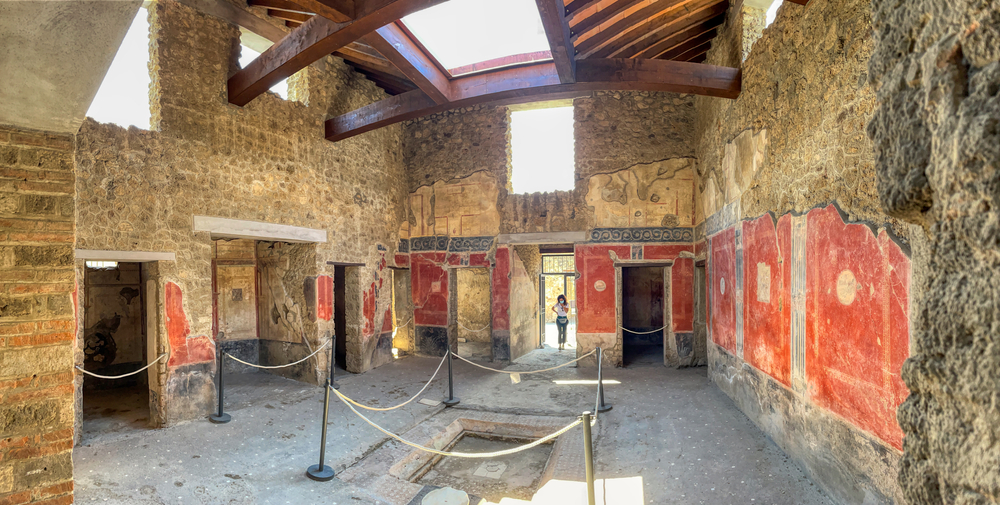
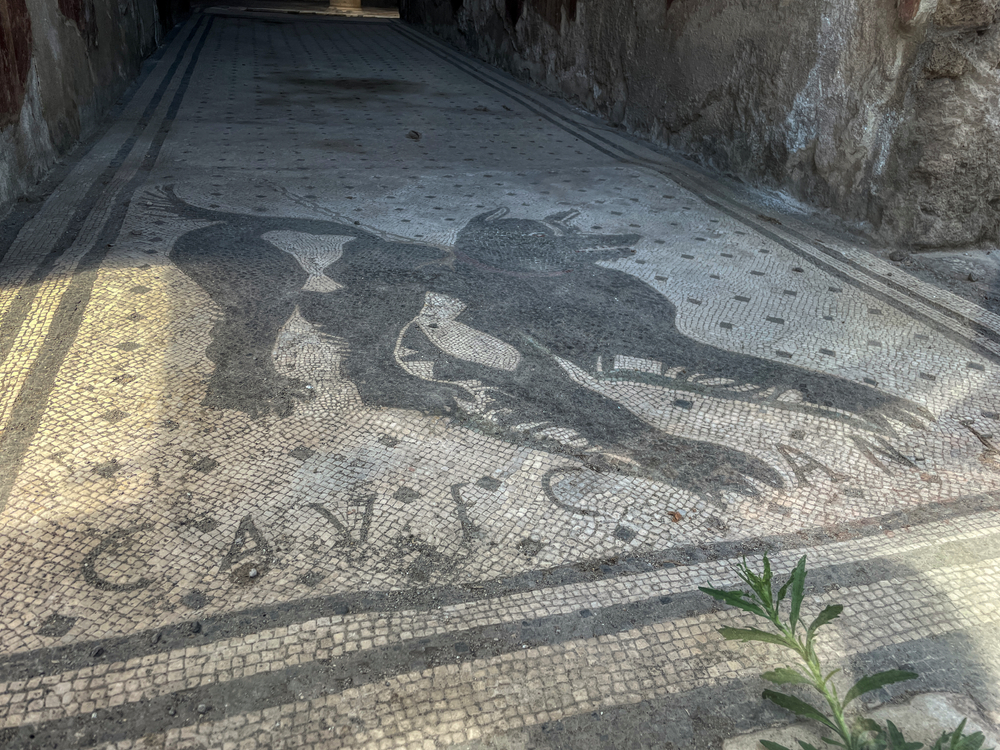
Tucked into a quiet street, modest in size and easy to overlook, stands one of Pompeii’s most artistically rich dwellings: the House of the Tragic Poet. This isn’t a villa of vast gardens or marble grandeur, but of stories, told in tesserae and pigment. At the threshold, a snarling dog frozen in mosaic greets visitors with the famous warning: “Cave Canem” – “Beware of the Dog”.
Inside, walls come alive with scenes from Homeric epics and mythic tragedies. Achilles, Iphigenia, and other storied figures inhabit the frescoes, their dramas playing out in vibrant color against stone. The home suggests its owner wasn’t a noble or merchant of lavish wealth, but someone steeped in literature, taste, and imagination.
Here, art wasn’t about power: it was about identity. The House of the Tragic Poet invites us to consider not just what its inhabitants owned, but what they cherished: drama, poetry, beauty, and the eternal echo of a well-told tale.
Location: it is located in Regio VI, Insula 8, just north of the Forum and close to the House of the Faun.
Ready to see all of these for yourself?
With every fresco, artifact, and fragment of daily life, Pompeii continues to surprise, seduce, and stir the imagination. From fast food counters to sacred blue sanctuaries, from mythic dining rooms to the echoes of a child’s chalky gladiator dreams, these discoveries don’t just belong to the past, they’re invitations. If you’ve ever dreamt of walking through history, of standing where stories and ash once settled side by side, join us. Our Pompeii tours are crafted to guide you through these wonders with depth, heart, and the thrill of discovery. Come explore the unforgettable with Iamme Ia!
Explore Sorrento and the Amalfi Coast with Iamme Ia!
Who better to help you navigate this area than Iamme Ia!, your expert companion. Connecting with us is easy. For more information on our tours, to make bookings, or to discuss your upcoming travel plans, please visit our tour pages or contact page on our website.
If you find yourself wandering the charming streets of Sorrento, feel free to stop by our office at Piazza Torquato Tasso 16, where our friendly staff is eager to help you plan your next unforgettable adventure. As a proud Gray Line licensee, Iamme Ia! has been committed since 2014 to not only showcasing the stunning landscapes and rich culture of the Amalfi Coast but also to providing a narrative that weaves together breathtaking views, diverse experiences, and memorable moments.
With Iamme Ia!, your journey through Italy will be more than just a visit—it will be a profound engagement with the heart and soul of the region. Let us turn your trip into an experience of a lifetime.
Remember to join our Instagram community for some extra fun content!